
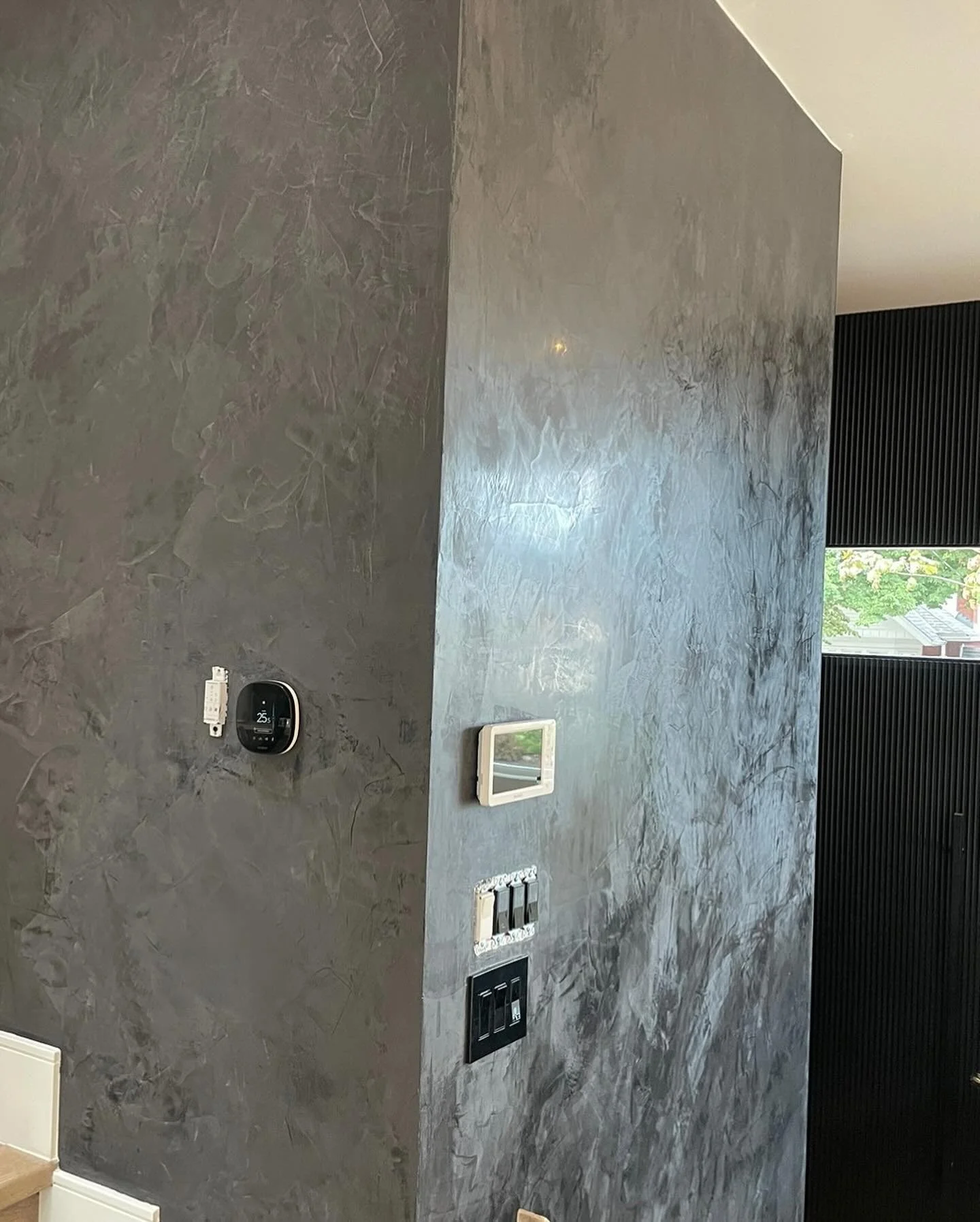
Venetian Plaster
What is Venetian plaster? Venetian plaster is a decorative wall finish made from lime-based or gypsum-based plasters applied in thin, multiple layers and burnished to create a smooth, polished surface with subtle depth and a soft sheen. It can mimic marble and natural stone, offering a refined, timeless look that suits both modern and traditional interiors.
Benefits
Aesthetic elegance: Produces a luxurious, high-end appearance with natural-looking variations and depth.
Durable finish: Properly applied and sealed Venetian plaster resists minor wear and can last many years.
Breathability: Traditional lime-based plasters allow moisture vapour to pass, reducing the risk of trapped moisture and mould.
Customizable: Available in a wide range of colours, textures and gloss levels—from matte to high polish.
Low maintenance: Smooth, sealed surfaces are easy to clean with gentle, non-abrasive cleaners.
Common styles and effects
Polished marble finish: High sheen and deep veining for a marble-like appearance.
Suede or matte finish: Soft, velvety look with low reflectivity.
Rustico or textured finish: More pronounced texture and trowel marks for a rustic or aged appearance.
Metallic Venetian plaster: Subtle metallic pigments add shimmer and depth for accent walls.
Where to use it
Living rooms and dining rooms for a sophisticated focal wall.
Entryways and hallways to create an immediate impression.
Bathrooms and powder rooms when sealed correctly to protect from moisture.
Commercial spaces such as boutique stores, offices and hospitality settings for a premium finish.
Application process (overview)
Surface preparation: Repair cracks, fill holes and ensure the substrate is clean, dry and stable. Prime porous surfaces to ensure even absorption.
Base coats: Apply one or more thin base coats of plaster, allowing each to dry as recommended.
Layering: Build up multiple translucent layers using a steel trowel to create depth.
Burnishing: Burnish the final layer with a clean steel trowel or spatula to achieve the desired sheen.
Sealing: Apply a protective sealant (wax, acrylic sealer or breathable topcoat) appropriate to the plaster type and room conditions.
Maintenance and care
Clean gently with a soft cloth and mild, pH-neutral soap if needed. Avoid abrasive cleaners and scrubbing pads.
Re-waxing or re-sealing may be required periodically in high-use areas to maintain sheen and protection.
Address water leaks or excessive humidity promptly to prevent damage.
Cost considerations Costs vary depending on material, finish complexity and labour. Venetian plaster is typically more expensive than standard paint because of the skilled labour and multiple application steps involved. Expect higher installation costs for polished or highly textured finishes and for surfaces requiring extensive preparation.
Choosing a professional
Look for contractors with specific experience in Venetian plaster and a portfolio of completed projects.
Request samples or a small mock-up on-site to confirm colour, texture and sheen.
Verify references and, where applicable, insurance and warranties for workmanship.
Summary Venetian plaster offers a durable, elegant alternative to paint and wallpaper, providing unique depth and a refined surface that elevates interiors. Proper preparation, skilled application and suitable sealing are key to achieving and maintaining a long-lasting, beautiful finish.