
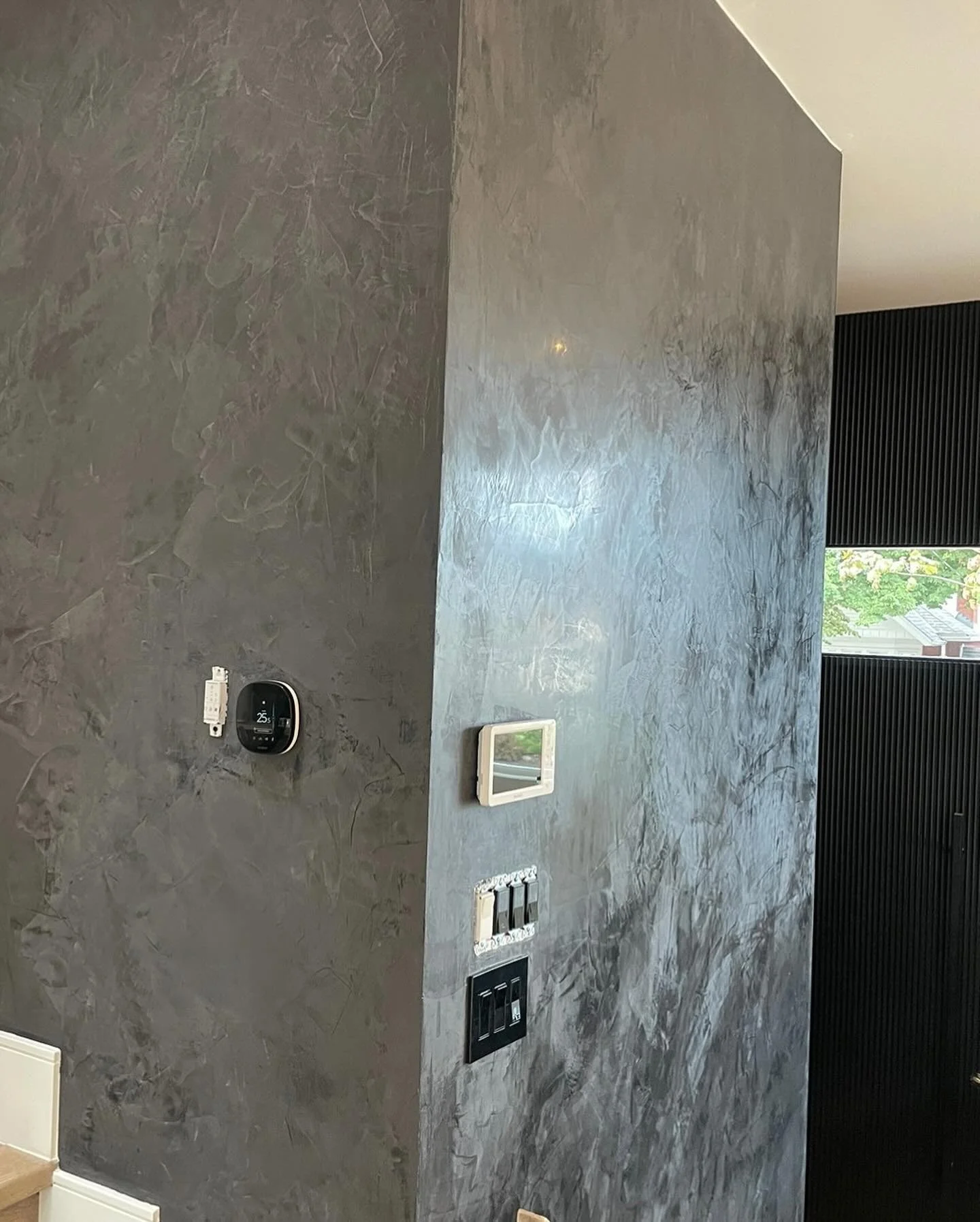
Venetian Plaster Interior Painting
Venetian plaster is a classic finishing technique that creates a smooth, polished surface with depth and subtle variation. It uses multiple thin layers of lime-based plaster, burnished to a satin or high-gloss sheen, and can mimic the look of natural stone such as marble. Ideal for feature walls, fireplaces, hallways and high-end interiors, Venetian plaster adds texture, luminosity and a timeless elegance to residential and commercial spaces.
Benefits
Luxurious appearance: Provides a refined, marble-like finish with depth and movement.
Durable and long-lasting: Properly applied and sealed, it resists cracking and wears well over time.
Breathable: Traditional lime-based plasters allow moisture transfer, reducing the risk of trapped moisture in older buildings.
Customizable: Available in a wide range of colours, sheens and textures—from smooth and polished to more rustic, troweled effects.
Low maintenance: Dust and dirt wipe away easily; re-polishing can refresh the surface if needed.
Typical Applications
Accent and feature walls
Entryways and foyers
Living and dining rooms
Bathrooms and powder rooms (when sealed appropriately)
Fireplaces and mantels
Commercial lobbies and boutique interiors
Materials and Tools
Venetian plaster compound (lime-based or acrylic-modified variants)
Trowel and stainless steel spatulas
Sanding pads or fine-grit sandpaper (for between coats if required)
Sealers/waxes or breathable protective topcoats
Primer suitable for substrate
Clean rags and mixing tools
Drop cloths and masking tape
Surface Preparation
Inspect substrate: Ensure walls are structurally sound, clean and free of loose paint, dust, grease or efflorescence.
Repair: Fill cracks and holes, sand rough spots and prime patched areas.
Prime: Apply a primer appropriate to the plaster type and substrate (e.g., masonry primer for concrete or gypsum primer for drywall). Some Venetian plaster systems recommend a coloured basecoat to enhance depth.
Ensure moisture levels are appropriate—avoid application on damp surfaces.
Application Overview
Basecoat: Apply one or more thin base layers with a stainless steel trowel, allowing recommended drying time between coats. Basecoat colours can be used to influence final tone.
Build-up layers: Apply additional thin layers, allowing partial drying and varying trowel direction with each pass to create depth and subtle texture. Layering is key to the final look.
Burnishing: Once sufficient layers are applied and dried to the manufacturer’s guideline, burnish with a clean trowel or polishing tool to compact the plaster and create a sheen. For higher gloss, continue burnishing progressively.
Distressing or antiquing (optional): For a more aged or varied look, lightly sand areas or apply a glaze/antiquing wash selectively.
Seal: Apply a breathable sealer, wax or protective topcoat depending on the product. In wet areas, choose a water-resistant finish rated for humidity.
Tips for Best Results
Test a sample: Always create a sample panel on-site to confirm colour, sheen and technique before committing to the entire space.
Work in small sections: Venetian plaster can be labour-intensive—working in manageable areas helps maintain wet edges and a consistent finish.
Practice technique: Trowel angle, pressure and speed affect the final appearance; practice on scrap board to develop the desired look.
Control environment: Avoid application in temperatures or humidity levels outside the manufacturer’s recommendations.
Choose the right product: Traditional lime plasters require different handling than acrylic-modified systems; select materials suited to the substrate and project needs.
Maintenance
Dust regularly with a soft cloth.
Clean gently with mild detergent and soft sponge for stains; avoid abrasive cleaners.
Re-wax or re-apply a protective coat if sheen diminishes over time.
Address chips or cracks promptly with spot repairs to prevent moisture ingress.
When to Hire a Professional Venetian plaster is an artisanal finish that relies on skillful trowel work and layering. For large areas, complex architectural details, high-visibility spaces, or when achieving a consistent, high-end finish is essential, hiring an experienced applicator is recommended. Professionals can also advise on the best product system for your substrate and climate, and provide warranty-backed installation.
Cost Considerations Costs vary depending on product type (traditional lime vs. acrylic), complexity of the finish, wall condition, and labour. Venetian plaster is typically more expensive than standard paint due to material costs and skilled labour time. Obtain multiple quotes and review examples of completed work before selecting a contractor.
Summary Venetian plaster transforms interiors with a durable, elegant finish that adds depth, refinement and visual interest. Proper preparation,