
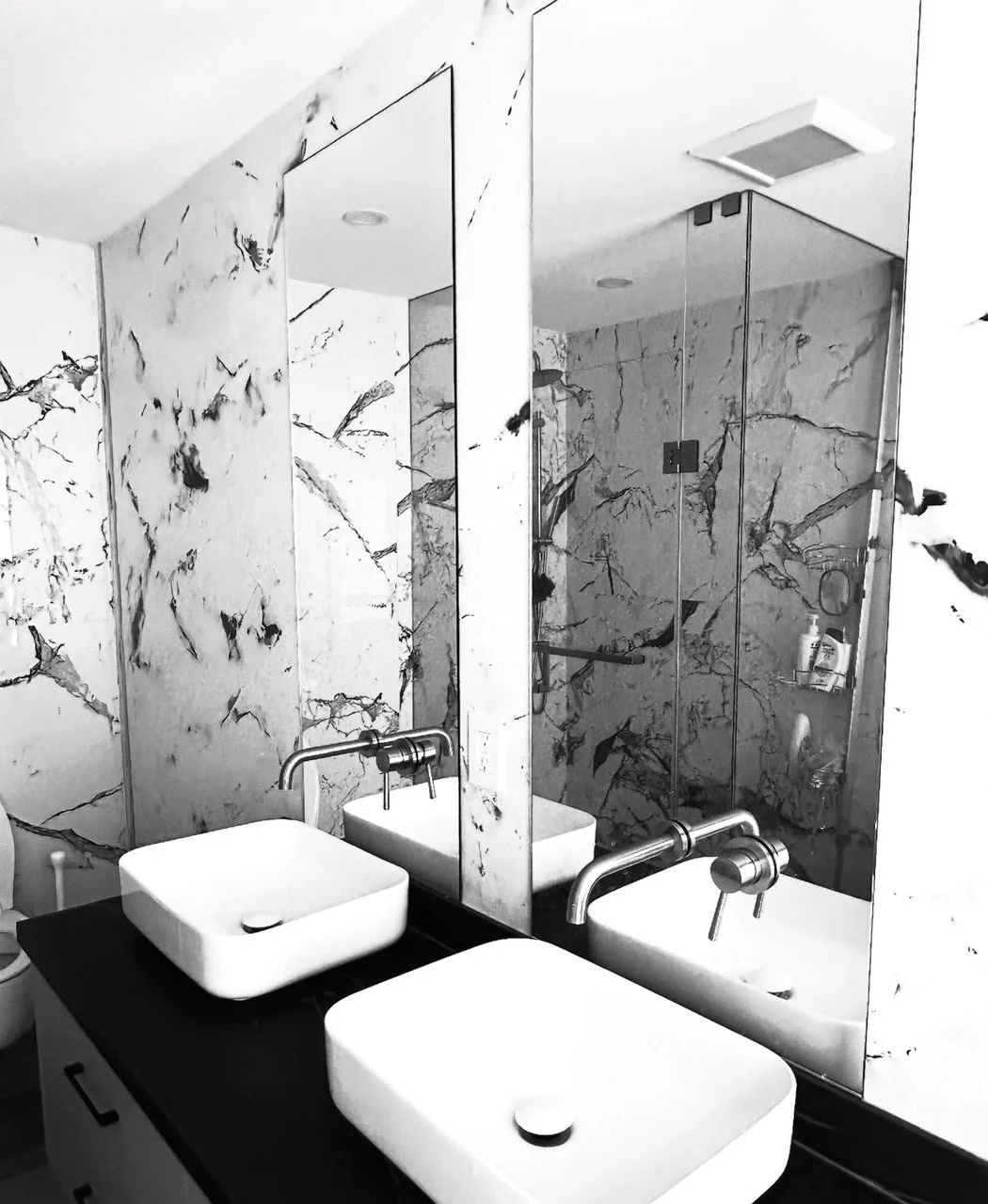
Residential Washroom Painting
Choosing the right paint and approach for a residential washroom requires balancing durability, moisture resistance, aesthetics and ease of maintenance. Bathrooms face unique challenges — high humidity, frequent temperature swings, splashes and potential mould growth — so selecting the appropriate products and method will extend the life of the finish and keep the space looking fresh.
Key considerations
Paint type: Use a high-quality acrylic latex (water-based) paint formulated for bathrooms or kitchens. These paints contain mildewcides and are formulated to resist moisture, yellowing and stains. Semi-gloss or satin sheens are typically best for washrooms because they resist moisture and wipe clean easily.
Surface preparation: Proper prep is critical. Clean walls and ceilings to remove soap scum, grease and mildew (use a diluted bleach solution or commercial mildew cleaner as needed). Repair cracks, gouges and loose caulk. Sand glossy surfaces to create tooth for paint. Prime patches and bare drywall with a stain-blocking, mould-resistant primer.
Ventilation: Ensure adequate ventilation before, during and after painting. Run exhaust fans and open windows where possible. Good ventilation reduces paint drying time and prevents moisture from getting trapped under the new finish.
Mould and mildew control: If mould is present, treat it thoroughly before painting. Use a fungicidal treatment and allow surfaces to dry completely. Consider mould-resistant primers and topcoats for high-risk areas, especially around showers and tubs.
Ceiling and trim: Use a mildew-resistant flat or eggshell paint for ceilings to reduce glare from overhead lights. For trim, baseboards, doors and cabinets, use a semi-gloss or high-gloss enamel for durability and easy cleaning.
Colour choice: Light, neutral tones can make a small washroom feel larger and brighter. Warm neutrals, soft greys and pale blues are popular. Dark colours can create a dramatic effect but may show water spots and require more careful lighting. Test paint samples on the wall to check colour under bathroom lighting.
Hardware and fixtures: Remove or mask all fixtures, hardware, mirrors, towel bars and outlet covers. Use painter’s tape rated for delicate surfaces to protect caulking and adjacent finishes.
Paint application: Use rollers with a smooth, short nap for smooth drywall; use longer nap for textured surfaces. Roll in consistent, even strokes and finish with a light “tip-off” stroke to reduce roller texture. Apply two coats if needed, allowing recommended dry times between coats.
Safety and cleanup: Use low-VOC or zero-VOC paints where possible to reduce fumes. Keep the room ventilated until the paint cures. Dispose of rags and sanding dust safely following local regulations.
Recommended finishes by area
Shower/tub surround (painted walls outside enclosure): Semi-gloss for splash resistance; consider tile or waterproof wall panels for direct wet areas instead of paint.
Walls outside immediate wet zone: Satin for a balance of durability and low sheen.
Ceiling: Flat or eggshell with mould-resistant properties.
Trim/doors/cabinets: Semi-gloss or gloss for ease of cleaning.
When to hire a professional
If mould covers a large area or is recurrent, a professional assessment and remediation may be required.
If walls have significant water damage, structural issues or extensive patching, a contractor can ensure underlying problems are fixed before finishing.
For high-end finishes, complex paint effects, or tight timelines, a professional painting crew will deliver consistent results and efficient cleanup.
Maintenance tips
Keep ventilation running during and after showers.
Wipe down wet walls and fixtures periodically to reduce moisture build-up.
Re-caulk joints where caulking has failed; moisture behind caulk can cause paint failure.
Touch up scuffs or chips promptly; keep a small amount of leftover paint for future repairs.
Selecting the right products and applying proper preparation and techniques will produce a washroom paint job that holds up to moisture, looks good and is easier to maintain over time.