
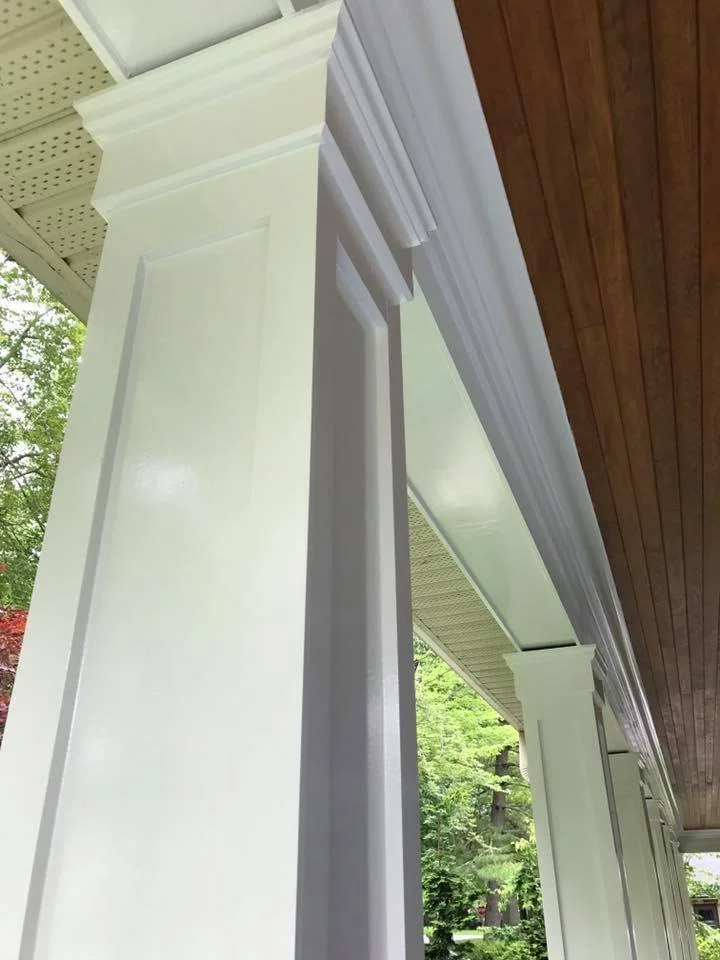
Exterior Column and Ceiling Paint and Stain
Preparing for the job
Inspect surfaces: Look for rot, cracking, loose trim, peeling paint, mildew or insect damage on columns and ceilings. Note any repairs needed before painting or staining.
Clean thoroughly: Remove dirt, mildew and chalk with a pressure washer at low setting or a scrub brush with a mild detergent solution. Allow surfaces to dry completely before proceeding.
Repair and replace: Replace rotten wood, tighten loose fasteners, re-caulk joints and gaps, and fill holes and cracks with an appropriate exterior wood filler. Sand rough or patched areas smooth.
Protect surroundings: Cover nearby landscaping, walkways and fixtures with drop cloths or plastic sheeting. Mask windows, doors and hardware with painter’s tape.
Choosing products
Paint vs stain: Use exterior paint for opaque, long-lasting colour and maximum protection; choose stain for a more natural wood look and to highlight grain. Solid-colour stains offer coverage similar to paint but usually with easier application and simpler maintenance. Transparent and semi-transparent stains best suit natural-wood aesthetics and require more frequent upkeep.
Primer: Apply a high-quality exterior primer on bare wood, repaired sections, and previously stained or new-to-paint surfaces. Use a stain-blocking primer where tannin bleed or knots are present or if switching from oil to latex.
Paint type: Choose 100% acrylic latex exterior paint for flexibility, UV resistance and adhesion on wood, masonry and previously painted surfaces. For metal or wrought-iron trims, use a product formulated for metal.
Stain type: Pick an exterior-grade stain with UV inhibitors and mildewcides. For high-traffic or exposed areas, consider a semi-solid or solid stain for better durability.
Finish: Flat and low-sheen finishes hide imperfections on ceilings; satin or semi-gloss finishes on columns are easier to clean and stand up better to touch and weather.
Colour selection and coordination
Ceilings: Opt for a lighter shade than surrounding walls—traditional porch ceilings often use a pale blue to deter insects and create an airy feel, or choose crisp white for a clean look.
Columns: Coordinate columns with trim, railings and soffits. Use an accent colour for bases and capitals if architectural details are present.
Contrast and scale: Use darker colours on bases to mask dirt and lighter tones higher up to visually lift the structure.
Application techniques
Surface prep: Sand glossy areas to promote adhesion; remove sanding dust with a tack cloth or brush. Apply primer to bare wood, patched areas and any previously stained surfaces that will be painted.
Brushes and rollers: Use high-quality synthetic brushes for latex paints and natural-bristle brushes for oil-based products. Use a medium-nap roller for textured ceilings and a shorter nap for smooth columns.
Spraying: Airless sprayers speed up large jobs—mask and protect surrounding areas carefully. Back-brush or back-roll sprayed coats to ensure even coverage and penetration, especially on wood grain.
Staining: Apply stain in the direction of the grain with a brush, roller or stain pad. Work in manageable sections and wipe off excess promptly for transparent and semi-transparent stains. Follow manufacturer’s recommended dwell time.
Multiple coats: Apply two coats of paint for best durability and uniformity; stains may require one or two coats depending on product opacity and wood absorption. Allow recommended dry times between coats and before exposing to weather.
Specific considerations for common materials
Wood columns and ceilings: Use products formulated for exterior wood. Ensure end grain and cut edges receive extra primer or stain to prevent moisture ingress. Solid stains or paint are recommended for heavily exposed or cedar/alder species prone to rapid weathering.
Fibreglass and composite columns: Clean with a mild detergent; scuff sand if glossy. Use an exterior acrylic primer designed for composites if the surface is new or unpainted, then topcoat with acrylic latex paint.
Aluminium or metal: Remove rust and treat with a rust-inhibiting primer before painting. Choose metal-compatible topcoats.
Stucco or masonry columns: Use elastomeric paint or masonry paint to accommodate thermal movement and prevent cracking. Primer suited to masonry is recommended.
Vinyl ceilings and trim: Use 100% acrylic exterior paint designed for vinyl application, and avoid dark colours that can cause thermal warping.
Weather and timing
Temperature and humidity: Follow product label for recommended application temperature range; avoid painting or staining in very humid, rainy or freezing conditions. Ideal temperatures are generally between 10°C and 32°C for most exterior products.
Drying time: Allow sufficient curing time before