
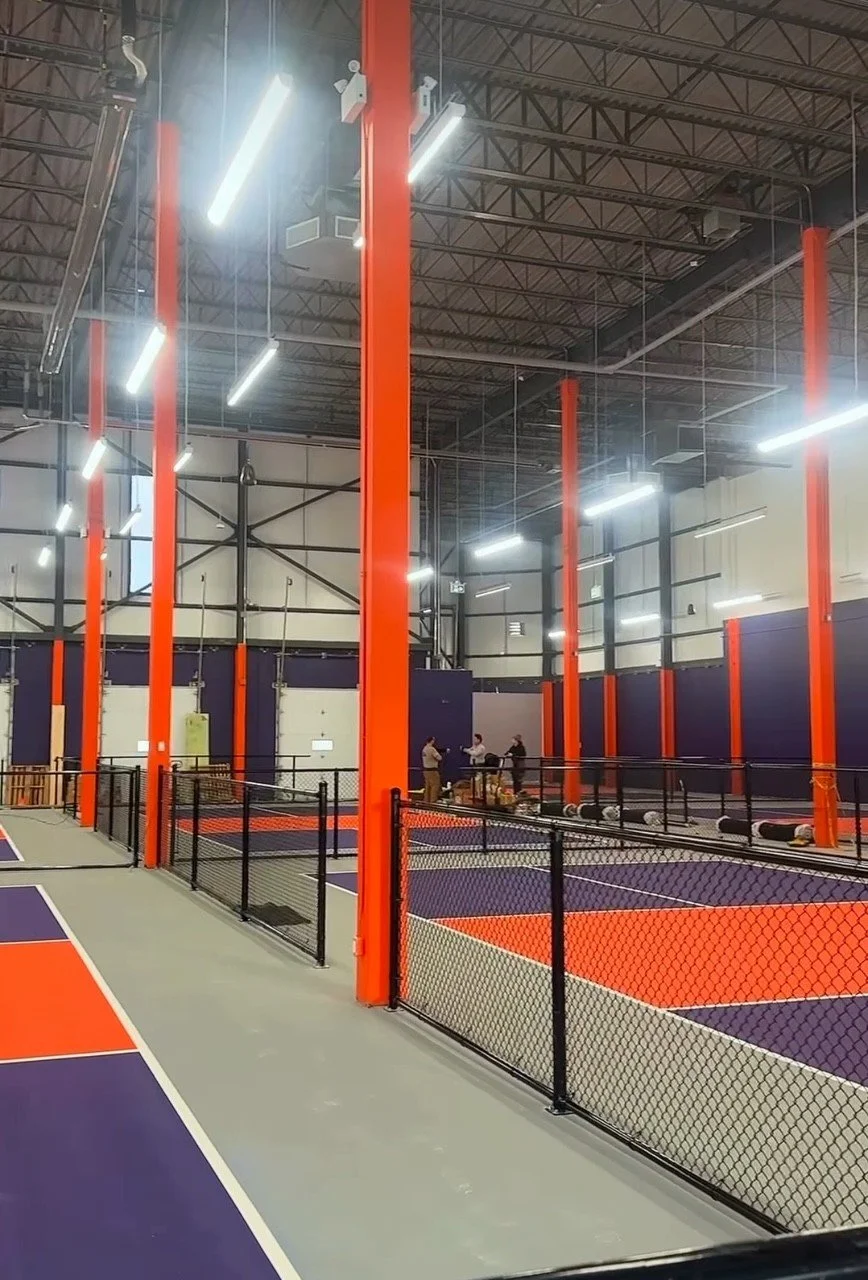
PicklePlex Painting
Preparing a sports complex for painting involves careful planning, durable material selection, and efficient execution to ensure the facility looks professional, remains safe, and withstands heavy use and environmental exposure. This guide outlines key considerations and best practices for painting indoor and outdoor sports complexes.
Assessment and Planning
Site inspection: Evaluate all surfaces (concrete, masonry, metal, wood, rubber, synthetic turf edges) for condition, moisture issues, cracks, efflorescence, rust, peeling paint and previous coatings.
Usage and traffic patterns: Identify high-impact areas—locker rooms, corridors, spectator stands, courts, gym floors, concession areas, exterior façades, and loading zones—to determine paint type and protective coatings.
Schedule and access: Plan work around facility programming to minimise disruption. Use phased approaches and night/weekend shifts when necessary. Secure permits and coordinate with facility managers for fire alarms, ventilation and access control.
Budget and lifespan: Factor initial costs, maintenance intervals, and long-term durability. Choosing higher-quality, purpose-built coatings reduces lifecycle costs.
Surface Preparation
Cleaning: Pressure wash exterior concrete and masonry to remove dirt, mildew and salts. Use degreasing agents for areas with oils or food residues.
Repair: Patch cracks, spalls and holes with appropriate repair mortar or caulking. Replace severely damaged sections of wood or metal.
Rust control: Remove rust from metal structures by abrasive blasting or power tool cleaning; apply corrosion-inhibiting primers.
Moisture testing: Conduct moisture readings on concrete and wood; do not paint until moisture levels are within acceptable ranges for chosen coatings.
Abrasion: For indoor sports floors (wood or synthetic), sand or abrade to ensure adhesion of new coatings. Follow manufacturer guidance for grit and procedures.
Masking and protection: Protect adjacent surfaces—benches, lighting, glass, scoreboards, turf, and gym equipment—with sheeting and tape.
Paint and Coating Selection
Interior walls and ceilings: Use high-traffic interior paints with stain resistance and scrub-ability—acrylic latex or alkyd-modified acrylics depending on substrate. Choose low-VOC products for indoor air quality.
Gym and court floors:
Wooden floors: Utilise multi-coat systems with sealer, pigment/non-slip coatings and durable urethane/polyurethane topcoats designed for sports floors to allow ball rebound and traction.
Synthetic or concrete sports courts: Use acrylic latex or epoxy-modified acrylics with textured topcoats for grip and abrasion resistance.
Exterior surfaces: Use elastomeric or high-build acrylics on masonry for crack-bridging and waterproofing; high-performance alkyd or acrylics for metal and wood.
Anti-slip and safety coatings: Apply textured finishes in ramps, stair treads, and entryways. Use specific non-slip additives compatible with the topcoat.
Line striping and court markings: Use specialised line-paint formulated for the substrate; ensure colours meet governing sport standards (e.g., basketball, volleyball, pickleball).
UV and weather resistance: For outdoor courts and facades, choose UV-stable pigments and fade-resistant binders.
Mildew and mould resistance: Select mildew-resistant coatings for humid areas such as natatoriums or locker rooms.
Colour and Design Considerations
Team and brand colours: Coordinate with facility branding while considering longevity—darker colours absorb heat outdoors; high-contrast lines improve playability and spectator viewing.
Visual ergonomics: Use colours and gloss levels that reduce glare under artificial lighting and enhance depth perception.
Zoning and wayfinding: Use colour coding to guide spectators and users (entrances, exits, emergency routes, restricted areas).
Acoustic and aesthetic treatments: Consider paint choices for acoustic panels and ceilings to balance appearance and sound control.
Application Techniques
Equipment: Use brushes, rollers, airless sprayers, and floor-specific equipment. For large exteriors, airless spray speeds application but requires careful masking.
Coating thickness and coverage: Adhere to manufacturer specified dry film thickness (DFT) and recoat intervals.
Environmental conditions: Apply within recommended temperature and humidity ranges; avoid painting during rainy or freezing weather for exteriors.
Ventilation and safety: Ensure proper ventilation indoors. Use respirators, eye and skin protection. Comply with local occupational health regulations.
Curing and return-to-service: Allow full cure time before resuming play or heavy use—this may vary from hours for some topcoats to several days for epoxy/urethane systems.
Maintenance and Touch-Up Strategy
Routine cleaning: Establish regular cleaning protocols for walls and floors using approved detergents to extend finish life.
Inspection schedule: Conduct seasonal inspections for wear, scuffs, and damage; concentrate on lines and high-traffic