
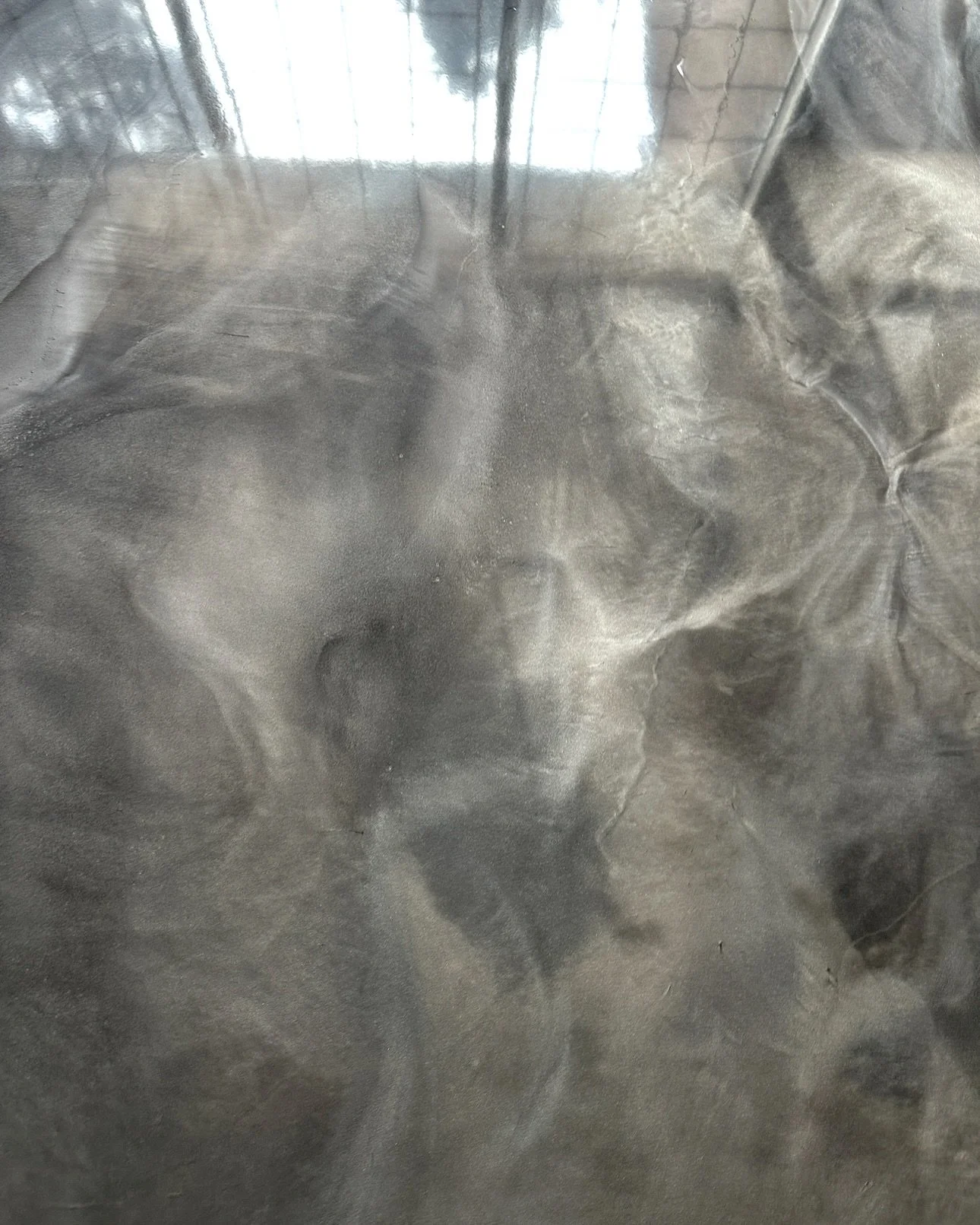
Marbleized Epoxy Floor Painting
Marbleized Epoxy Floor Painting
What it is
Marbleized epoxy floor painting uses pigmented epoxy and metallic or mica additives to create a swirl, veining, or cloud-like finish that mimics natural marble. The system is applied over a prepared concrete substrate and typically includes a base epoxy, coloured or metallic additives, and a clear topcoat for durability and gloss.
Key benefits
Aesthetic: Achieves luxurious marble-like appearance with a wide range of colours and effects.
Durability: Epoxy resists abrasion, stains, chemicals and impact when properly installed.
Low maintenance: Smooth, non‑porous surface is easy to clean and disinfect.
Cost-effective: Less expensive than full marble installation and quicker to install.
Seamless: Continuous, joint-free surface reduces dirt traps and improves hygiene.
Where it’s commonly used
Residential: garages, basements, kitchens, living areas.
Commercial: showrooms, retail stores, restaurants.
Light industrial: offices, lobbies, hospitality spaces with moderate traffic.
Surface preparation
Inspect and repair: Patch cracks, spalls and deep voids with appropriate repair mortar or epoxy fillers.
Mechanical profiling: Diamond grinding or shot blasting to remove coatings, laitance and to achieve a 1–3 mil (25–75 µm) CSP (concrete surface profile) appropriate for epoxy bonding.
Clean thoroughly: Remove dust, oil, grease and contaminants with degreaser and rinse. Ensure surface is dry.
Moisture check: Test for moisture vapor emission and relative humidity within limits specified by the epoxy manufacturer. High moisture requires a vapour mitigation system before epoxy.
Priming: Apply a compatible epoxy primer to improve adhesion and reduce pinholing.
Materials and tools
Two-part epoxy base and hardener (solids content and pot life chosen for site conditions).
Metallic or mica pigments, pearl additives, UVO pigments for colour stability.
Polyurethane or polyaspartic clear topcoat for abrasion and UV resistance where needed.
Mixing containers, drill with mixing paddle.
Squeegees, notched trowels or squeegee blades for spreading base coat.
Brushes, short-nap rollers or spiked