
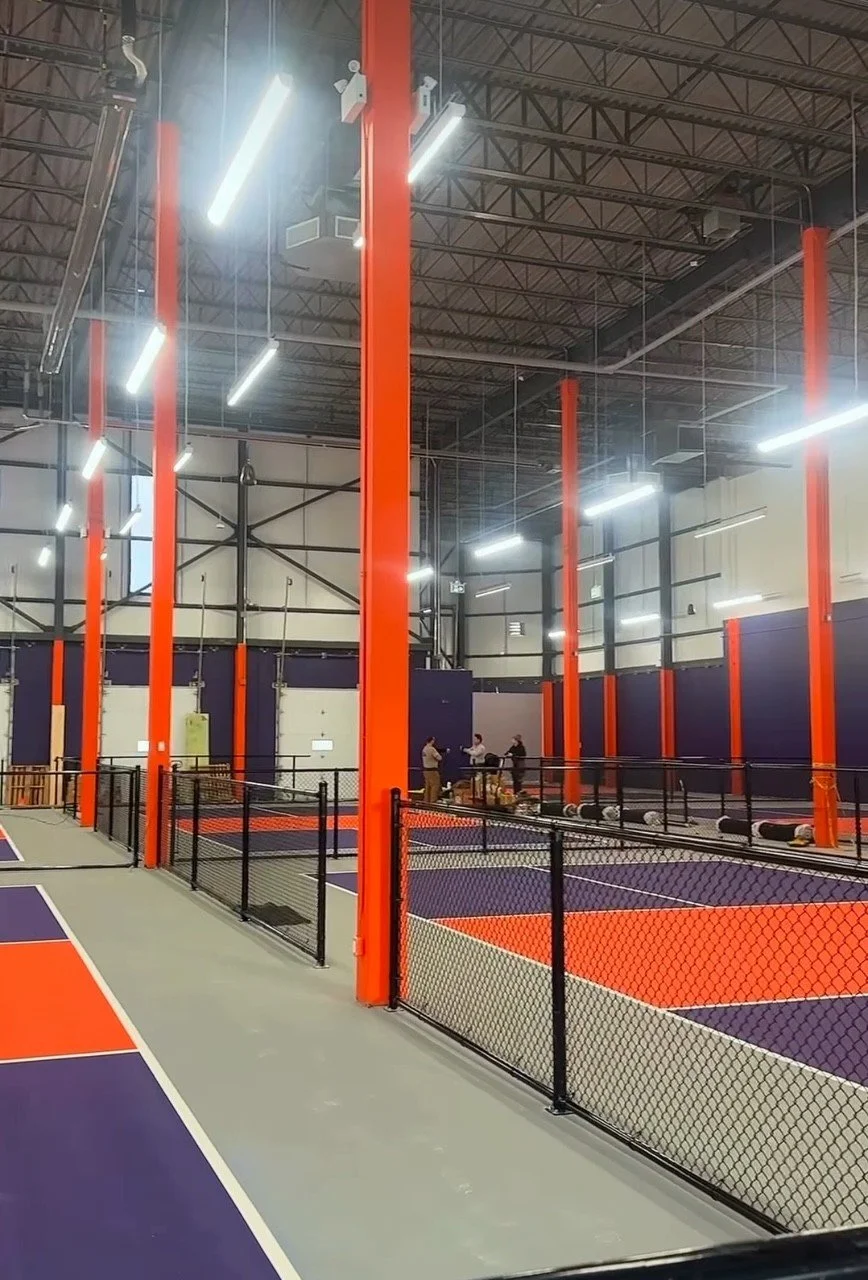
PicklePlex Aurora Industrial Painting
Sports Complex Painting
A professional paint job in a sports complex does more than refresh surfaces — it improves safety, durability and visual identity while reducing long-term maintenance costs. This guide covers planning, surface preparation, coating selection and application methods specific to sports facilities such as gyms, arenas, natatoriums and multi-use community centres.
Project planning and goals
Define facility needs: courts, walls, ceilings, seating, locker rooms, corridors, exterior facades and signage. Note high-traffic and impact zones (basketball courts, weight rooms, entryways).
Establish performance goals: abrasion resistance, slip resistance, chemical and moisture resistance, vapour barrier properties, UV stability, and ease of cleaning.
Schedule around facility use: arrange night or off-season work, phased closures, or temporary relocations to minimise disruptions to teams and programs.
Budget and lifecycle: include costs for primers, topcoats, line painting, floor coatings, masking, labour, drying time and future recoats. Consider total cost of ownership — higher-quality coatings often extend service life and lower maintenance frequency.
Surface assessment and preparation
Inspect substrates: concrete, wood, steel, masonry, drywall and synthetic sports surfaces (vinyl, polyurethane). Identify cracks, spalls, delamination, rust, efflorescence and contamination (oil, grease, salt).
Concrete floors: test moisture content and pH. Ensure slab dryness and compatibility with moisture-tolerant systems if required. Remove old coatings using mechanical methods (diamond grinding, shot blasting) to achieve profile and adhesion. Repair cracks and spalls with suitable patching mortars and allow proper cure.
Wood floors: assess for hardness, moisture, loose boards and finish wear. Sand to bare wood where necessary, replace damaged boards and ensure secure fastening.
Metal and steel: remove rust, millscale and existing failed coatings by abrasive blasting or mechanical cleaning. Apply appropriate primers to prevent corrosion.
Walls and ceilings: clean, repair drywall and concrete, and prime porous or patched areas to ensure uniform topcoat appearance.
Moisture and ventilation: confirm HVAC and dehumidification for proper curing, especially in natatoriums and cold climates. Guard against moisture drive from slabs.
Coating selection
Floor systems:
Acrylic sports paints: economical, easy to recoat, suitable for gymnasium hardwood (clear or pigmented) and for marking lines. Less durable than resinous systems in high-impact areas.
Polyurethane (one- or two-component): excellent abrasion and chemical resistance, low VOC options available. Common for both wood and concrete surfaces when longer life and gloss retention are required.
Epoxy floor systems: durable, chemical resistant, and suitable for concrete. Use slip-resistant aggregates in high-traffic zones. Beware of UV yellowing for exterior or sunlit areas unless UV-stable topcoat is used.
Polyaspartic/polyurea coatings: fast curing, high abrasion resistance, and can be applied in thin layers with quick return-to-service — useful for tight schedules.
Sport-specific cushioned systems: multi-layer polyurethane formulations designed for shock absorption, ball bounce and player safety for hardwood replacements or overlays.
Line marking and logos: use factory-tinted, compatible paints for crisp lines and colour-matching. Thermoplastic lines or tape can be used for heavy-wear areas.
Walls and ceilings: select washable, mildew-resistant paints for locker rooms and natatoriums. Use high-build coatings on cinderblock or masonry to hide imperfections. Use anti-graffiti topcoats in public areas.
Exterior coatings: elastomeric or acrylic masonry systems for waterproofing and crack bridging; UV-resistant acrylics for metal panels; zinc-rich primers for steel.
Application best practices
Mock-up and testing: complete test patches for adhesion, colour, texture and slip resistance. Verify line layout and logo application with stakeholders.
Temperature and humidity controls: abide by manufacturer limits for ambient, surface and substrate temperatures. Avoid application during precipitation or extreme conditions.
Priming and bonding: use primers tailored to substrate and topcoat chemistry. Ensure full cure before applying subsequent coats.
Layer build and thickness: follow specified mil thickness and coverage rates. Uniform build prevents premature failure.
Slip resistance: integrate slip-resistant additives, textured coatings or broadcast aggregates in key areas (entrances, ramps, locker rooms) without compromising ball performance in play areas.
Masking and protection: protect non-target surfaces, seating and equipment. Use dust control during surface preparation to avoid contaminating finished coatings.
Safety, compliance and environmental considerations
VOC and emissions: choose products that meet local VOC regulations and allow safe occupancy post-application. Provide Material Safety Data Sheets (MSDS) and ensure proper ventilation during