
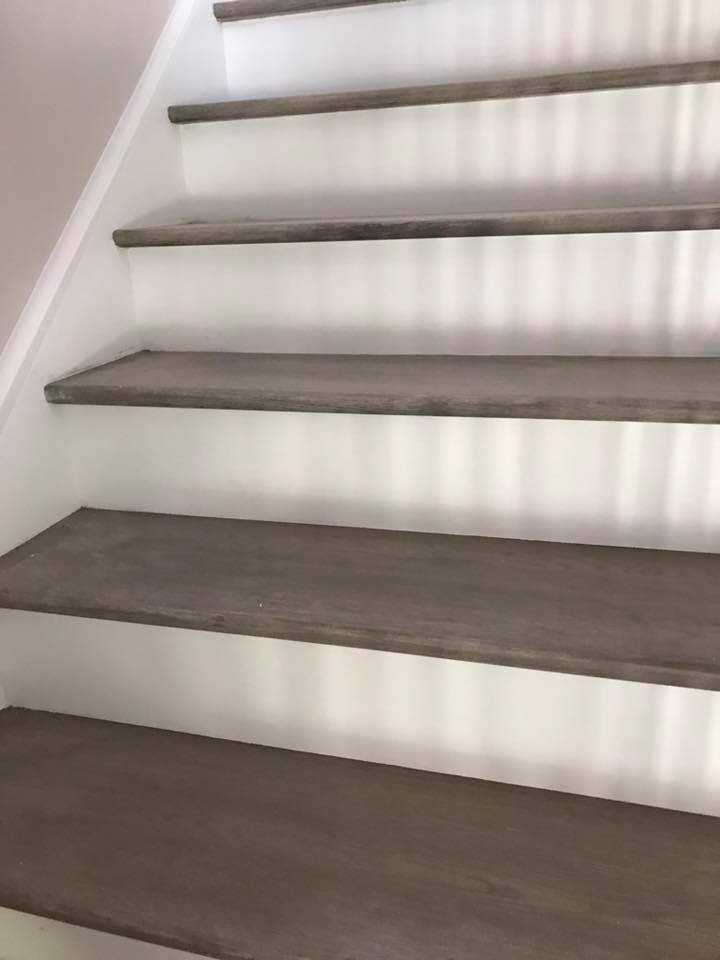
Stairs Painting and Staining
High-traffic staircases need finishes that look great and stand up to daily wear. At INEX Painting & Finishing, we provide professional stairs painting and staining services for residential and commercial properties across Messa, combining durability, slip safety, and aesthetic appeal.
Our stairs services
Surface assessment: Inspect treads, risers, handrails, balusters and landings for wear, loose components, previous coatings, and moisture or rot.
Repair and preparation: Tighten or replace loose stair parts, fill gouges and nail holes, sand surfaces to ensure adhesion, and replace damaged wood if required.
Priming and sealing: Use high-quality primers and sealers suited to the substrate (wood, metal, concrete) and the finish system chosen.
Painting: Apply durable, low-VOC paints in satin or semi-gloss sheens for easy cleaning and resistance to scuffing. We use high-build systems on risers and edges for long life.
Staining and finishing: Offer transparent, semi-transparent and solid stains with clear protective topcoats (polyurethane, spar varnish or waterborne finishes) to highlight wood grain while providing abrasion resistance.
Non-slip options: Add texture or anti-slip additives to coatings on treads, use contrasting nosings, or install discreet metal or rubber nosing strips to meet safety needs.
Custom colour and design: Coordinate with existing décor or create two-tone schemes, painted risers with stained treads, or patterns for a custom look.
Clean-up and protection: Protect adjoining floors and trim during work and leave the site clean with cured finishes ready for use per manufacturer cure times.
Common materials and recommendations
Hardwood treads (oak, maple, walnut): Best with oil- or water-based stains and a durable waterborne or oil-modified polyurethane topcoat. Waterborne finishes dry faster and resist yellowing.
Softwoods (pine): Consider solid-colour stain or paint to reduce blotching; use a stain-blocking primer where needed.
Concrete stairs: Use concrete-specific primers and coatings (epoxy or acrylic concrete paint) with non-slip aggregates added.
Metal stairs and handrails: Clean and prime with rust-inhibiting metal primer; finish with alkyd or acrylic metal paint for long-lasting protection.
Durability and maintenance
Expect professionally applied paint and stain systems to last 5–15 years depending on traffic, finish choice and maintenance.
For high-traffic areas, recoat topcoats every 3–5 years to restore protection and appearance.
Routine cleaning with a mild detergent and avoiding harsh abrasives will extend the life of finishes.
Timing and project considerations
Small staircases can often be completed in 1–2 days (plus cure time); larger or multi-level projects may require phased work to keep parts of the stair usable.
Temperature, humidity and ventilation affect drying and curing; waterborne products benefit from moderate conditions.
For multi-colour or patterned jobs, expect additional masking and layout time.
Why choose INEX Painting & Finishing
Experienced crews trained in surface preparation, staining techniques and safe application.
Use of quality products chosen for durability, low VOCs and compatibility with the substrate.
Attention to safety and slip resistance without sacrificing aesthetics.
Clean, professional workmanship and clear project timelines.
Request a consultation To get accurate pricing and timing, we’ll assess your stairs in person to consider wood species, condition, colour preferences and safety needs. Provide approximate number of steps, material (wood/metal/concrete), and whether you want painting, staining or a combination to schedule your on-site evaluation.
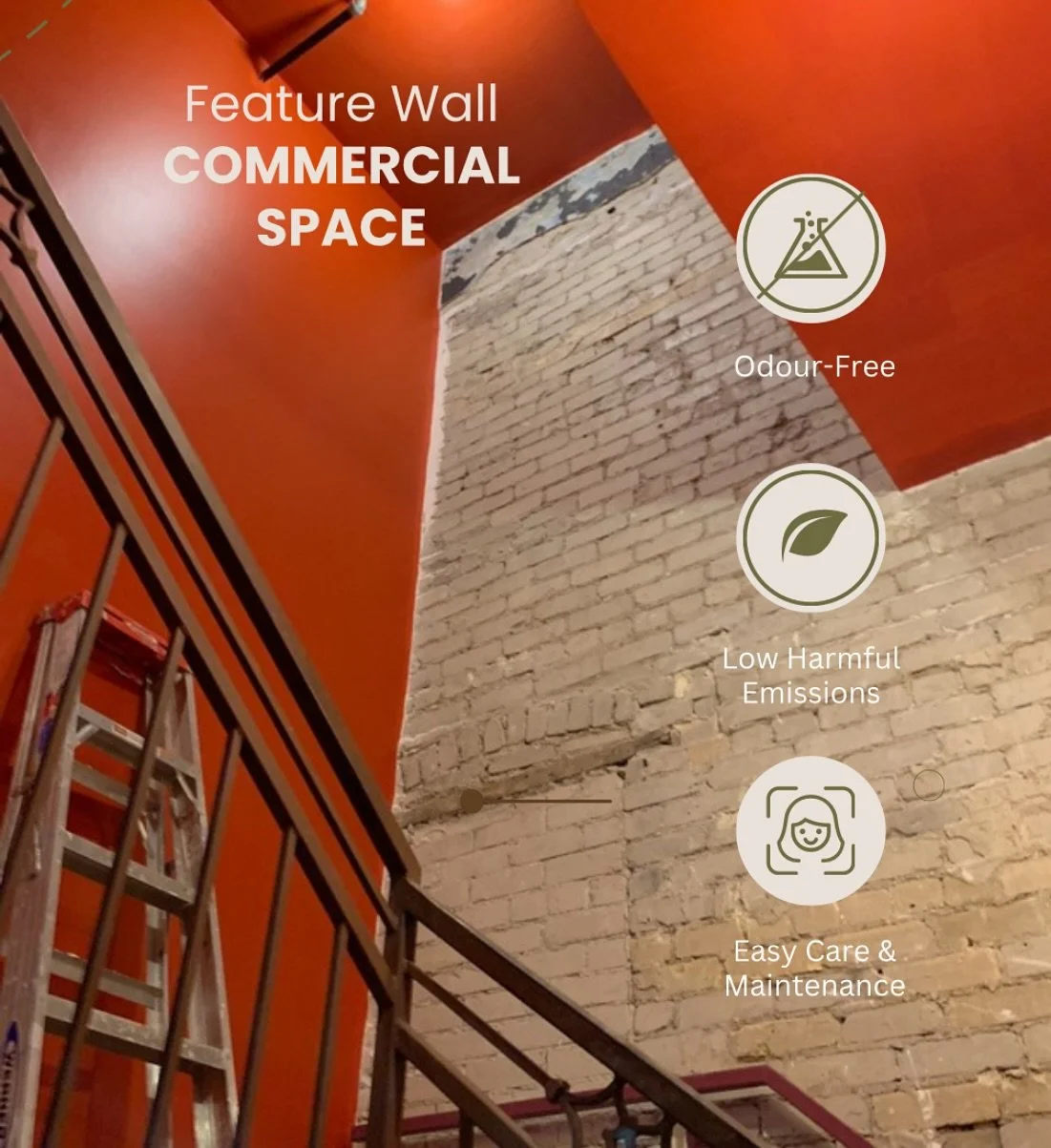
Commercial Stairway Painting
Commercial Feature Wall Painting
A commercial feature wall is a powerful design element that can transform an ordinary workspace into a distinctive, on-brand environment. Whether you’re refreshing an office lobby, retail storefront, hotel reception or restaurant interior, a professionally painted feature wall creates focal interest, reinforces brand identity and improves customer and employee experience.
Why choose a painted feature wall?
Cost-effective impact: Painting a single wall is far less expensive than full-room renovations but delivers immediate visual change.
Brand reinforcement: Use colours, logos, or slogans that align with your brand palette to strengthen recognition.
Versatility: From subtle textures and muted tones to bold murals and geometric patterns, paint techniques suit any aesthetic.
Quick turnaround: Professional painters can complete most feature-wall projects in a day or two, minimising business disruption.
Durable and maintainable: Commercial-grade paints and finishes stand up to wear, are easy to clean and can be retouched as needed.
Popular feature wall styles for commercial spaces
Accent colour wall: A single bold or contrasting colour to draw attention or define a space.
Textured finishes: Venetian plaster, suede effects, or faux concrete for a tactile, upscale appearance.
Geometric patterns: Sharp lines, colour blocking or repeating motifs that lend a modern, custom look.
Mural and illustrative art: Hand-painted or stencilled imagery that tells a brand story or creates a memorable environment.
Brand graphics and logos: High-quality painted logos or slogan walls that communicate identity clearly.
Ombre and gradient walls: Smooth colour transitions that create depth and a sophisticated atmosphere.
Chalkboard or writable walls: Functional surfaces for menus, announcements or interactive customer engagement.
The process — what to expect
Consultation and design
Discuss goals, brand guidelines, and functional needs.
Site visit and measurements to assess surface condition, lighting and access.
Design options: colour choices, pattern mockups and finish recommendations.
Preparation
Protect floors, furnishings and fixtures with drop cloths and masking.
Repair and prime surfaces: filling holes, sanding and applying appropriate primers for adhesion and longevity.
Painting and detailing
Apply base coats with consistent coverage.
Execute feature techniques—stencilling, masking for geometric lines, or hand-painted mural work—using skilled applicators.
Finish with protective topcoats where required (washable, scuff-resistant or anti-graffiti coatings).
Clean-up and handover
Remove all masking, clean the site and perform a final inspection with the client.
Provide care instructions and touch-up recommendations.
Material and finish selection
Paint type: Use commercial-grade acrylic or alkyd paints depending on the surface and durability needs.
Finish level: Matte and eggshell hide imperfections; satin and semi-gloss are easier to clean and more durable for high-traffic areas.
Environmental considerations: Low-VOC and zero-VOC options improve indoor air quality and support sustainability goals.
Budget considerations
Costs vary based on wall size, complexity of design, surface preparation, and finish products. Simple accent walls are typically the most affordable; custom murals and intricate stencilling increase labour and design time. Request a detailed written estimate with scope, timelines and warranty information.
Maintenance and longevity
Use washable finishes in high-traffic zones and follow manufacturer cleaning instructions.
Schedule periodic inspections for scuffs or chips; small areas can be retouched to extend the life of the wall.
For writable or chalkboard walls, follow reconditioning steps recommended by the painter.
Choosing a professional painter
Look for commercial experience, relevant certifications and a portfolio of feature-wall projects.
Ask for references, proof of insurance and a clear contract outlining project milestones.
Ensure the painter works with your maintenance team to plan minimal operational disruption.
A well-executed feature wall is a cost-efficient, high-impact way to strengthen brand presence and improve the look and feel of commercial spaces. With the right design and professional execution, a painted feature wall becomes a long-lasting asset that supports both aesthetics and function.