
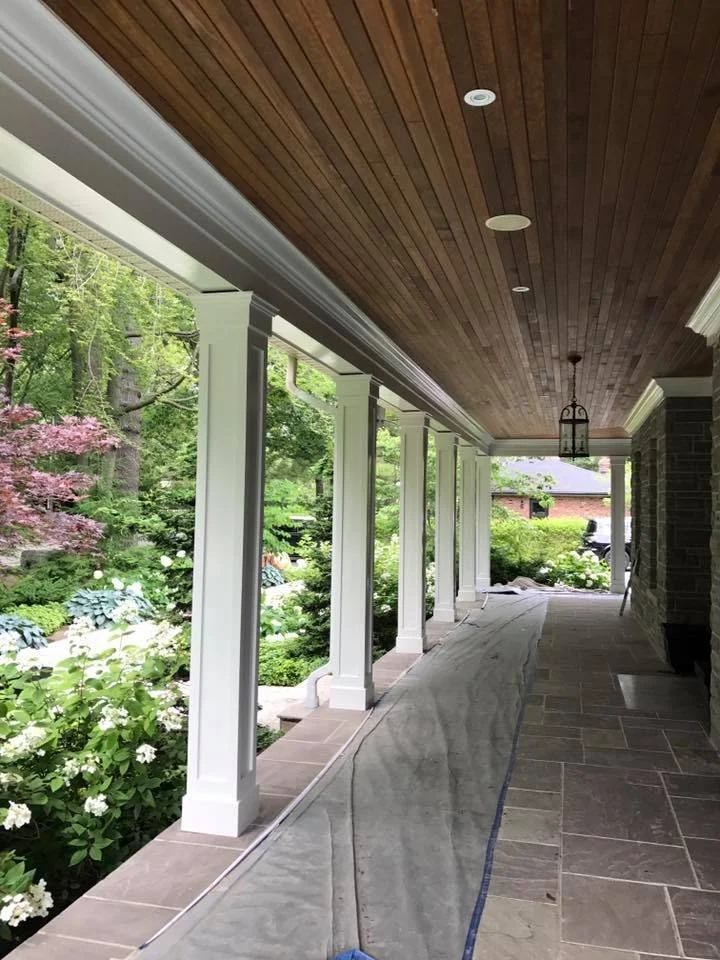
Exterior Painting & Wood Stain
Exterior Painting and Staining
Selecting the right approach for exterior painting and staining protects your home, enhances curb appeal, and extends the life of siding, trim and decks. Whether you’re refreshing faded paint, renewing weathered stain, or preparing surfaces for a full colour change, the following guidance covers materials, surface preparation, application techniques and maintenance best practices for Canadian climates.
Materials and finishes
Paint types:
100% acrylic latex: Best general choice for siding, trim and soffits — flexible, durable, resists chalking and holds colour well in sun and cold.
Alkyd (oil-modified) enamels: Useful for metal or high-traffic trim; older houses often have oil-based finishes underneath, which can affect adhesion.
Primer: Use a stain-blocking primer for tannin-rich woods (cedar), knots, or surfaces with previous staining or water damage.
Stain types:
Transparent and semi-transparent stains: Preserve wood grain; best for decks, fences and cedar siding. Reapplication every 1–3 years may be required depending on exposure.
Semi-solid and solid stains: Provide more pigment and protection while still showing some texture; extend maintenance intervals to 3–5 years.
Deck-specific formulations: Include slip resistance and UV inhibitors.
Sheen recommendations:
Flat to low-sheen paints for broad siding to mask imperfections.
Satin or eggshell for ease of cleaning on trim and doors.
Semi-gloss or gloss for window frames, fascia and other trim requiring frequent washing.
Surface preparation
Inspection:
Check for rot, insect damage, and loose boards. Replace or repair compromised wood before finishing.
Test adhesion on existing surfaces if unsure of previous coatings.
Cleaning:
Remove dirt, mildew and flaking coatings using pressure washing (use moderate pressure for wood to avoid damage) or scrubbing with a house-cleaning solution.
Allow adequate drying time — often several days in cool or humid conditions.
Removing loose paint and sanding:
Scrape and sand back to a feathered edge to ensure new paint bonds well. On older homes, test for lead-based paint and follow appropriate removal/disposal regulations if present.
For large areas, power sanding should be used cautiously to avoid gouging.
Repair and priming:
Fill cracks and nail holes with suitable exterior-grade filler.
Prime bare wood, repaired areas and metal with an appropriate primer. For cedar and other high-tannin woods, use a stain-blocking primer.
For surfaces with mildew, treat with a bleach solution or mildew remover before priming.
Application techniques
Conditions:
Ideal temperature range for most exterior paints and stains: 10°C to 25°C. Avoid application when freezing temperatures are expected within 24 hours or in direct, hot sun that can cause flash drying.
Avoid painting in high humidity or rain.
Tools:
Brushes: Synthetic bristles for latex; natural bristles for oil-based products.
Rollers: Use appropriate nap length based on siding texture.
Sprayers: Airless sprayers speed application on large areas and textured surfaces; always back-roll or brush after spraying for uniform coverage and adhesion.
Coats:
Two coats of finish paint over a properly primed surface are standard for durability and colour uniformity.
For stains, follow manufacturer directions; some solid stains act like paint and usually require two coats, while transparent stains may need only one.
Trim and detail work:
Paint trim after siding to avoid drips; caulk joints between trim and siding with a paintable exterior caulk.
Use painter’s tape where necessary for sharp lines, removing tape before the final coat fully cures.
Special considerations for Canadian climates
Freeze–thaw cycles: Use flexible, acrylic formulations that tolerate expansion and contraction. Ensure proper sealing and flashing around windows and doors to prevent water ingress that accelerates finish failure.
UV exposure: Southern and western exposures receive higher UV stress; select products with strong UV resistance and consider more frequent maintenance on decks and exposed trim.
Moisture and mould: In coastal or humid areas, choose products with mildewcide additives and ensure good ventilation in eaves and soffits to reduce trapped moisture.
Decks, fences and pergolas
Wood selection and preparation:
Use pressure-treated lumber for structural parts and rot-resistant species (cedar, redwood) for visible