
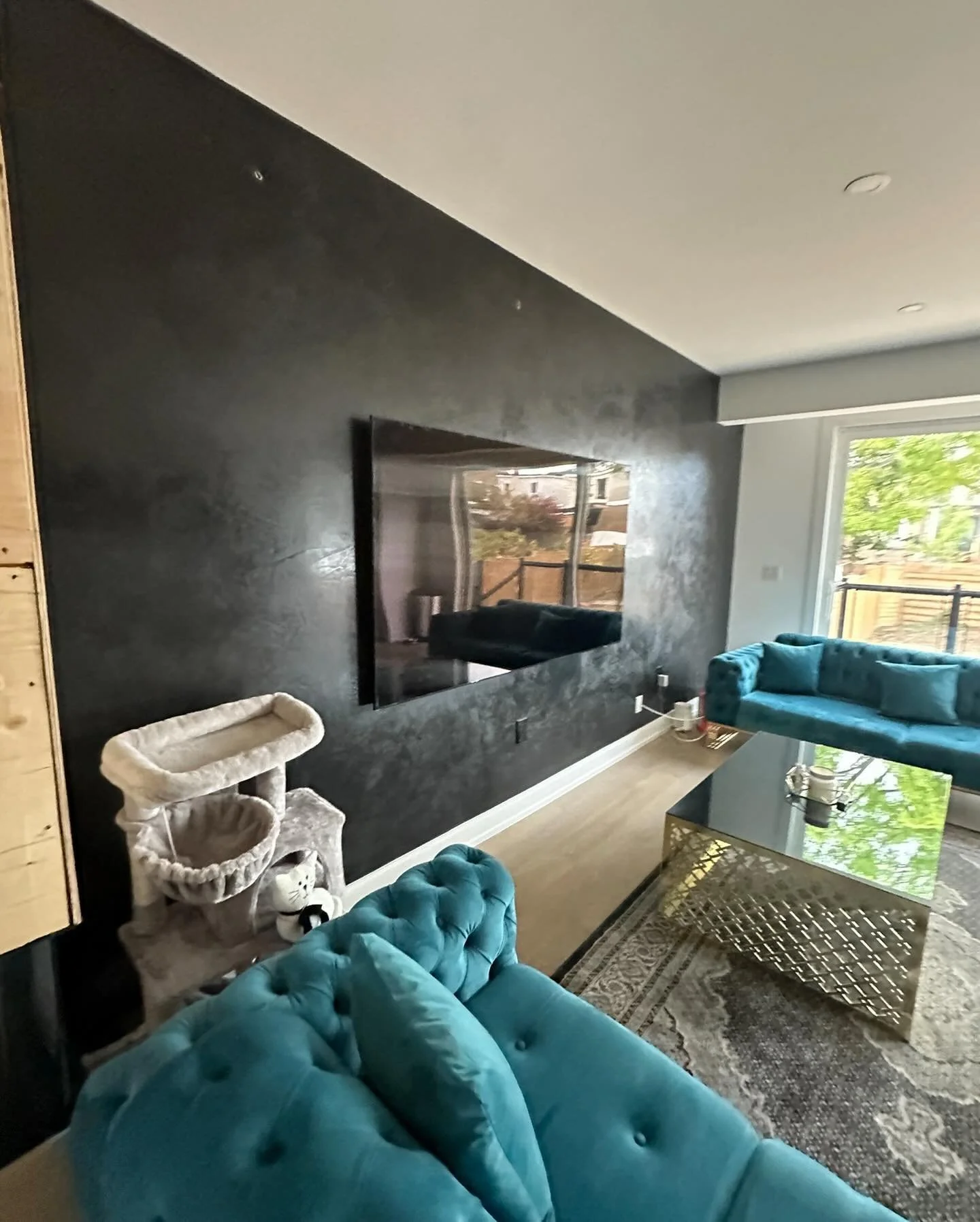
Venetian Plaster Painting
What it is Venetian plaster is a decorative wall finish made from slaked lime, marble dust and pigments, applied in thin layers and burnished to a smooth, low-sheen or high-gloss surface. The technique creates subtle depth, soft variegation and the appearance of polished stone or aged plaster. It’s valued for aesthetic richness, durability and a natural, breathable finish.
Characteristics and benefits
Appearance: Smooth, layered look with mild tonal variation and a polished sheen. Can mimic marble, travertine or natural stucco.
Durability: Hard, long-lasting surface that resists cracking when applied correctly and maintained.
Breathability: Lime-based composition allows moisture vapor to pass, reducing the risk of trapped moisture in older or solid-wall assemblies.
Eco-friendly options: Natural ingredients and low- or zero-VOC formulations are available.
Versatility: Can be tinted to a wide range of colours and finished matte, satin or high-gloss. Suitable for feature walls, fireplaces, ceilings and accent details.
Applications
Interior walls in living rooms, dining rooms, hallways and foyers.
Feature walls and alcoves.
Fireplace surrounds and mantels (with appropriate protective topcoats).
Commercial spaces such as reception areas, restaurants and boutique retail.
Restoration projects where breathable, lime-based finishes are preferred.
Common techniques and finishes
Marmorino: A traditional Italian style with a subtle marble-like appearance and medium sheen.
Lucidato (polished): Many thin coats applied and burnished to a high-gloss, mirror-like finish.
Scagliola: A coloured, inlaid effect to simulate exotic stone.
Rough or rustic textures: Applied with coarser tools for a more tactile, aged look.
Venetian with metallics: Fine metallic powders or glazes added for a soft metallic shimmer without obvious glitter.
Process overview
Assessment and preparation: Inspect substrate (plasterboard, lime plaster, concrete, masonry). Repair cracks, ensure stable, clean, dry surface. Prime or apply a suitable basecoat if required.
Basecoat application: One or more base layers of plaster are trowelled on to even out the surface and provide adhesion.
Building layers: Apply multiple thin layers (typically 2–4), allowing appropriate drying time between coats. Each layer is applied with varying pressure and direction to build depth.
Burnishing: Final layers are burnished with a steel trowel or special spatula to compact the surface and develop sheen.
Sealing/protection: Depending on the product and location, a breathable sealer or wax may be applied to increase stain resistance and ease of maintenance.
Maintenance and care
Dust regularly with a soft cloth or microfiber duster.
Clean spills promptly with a damp sponge and mild, pH-neutral cleaner. Avoid abrasive cleaners or heavy scrubbing.
Apply periodic re-waxing or re-sealing if a protective finish was used, especially in high-traffic areas.
Small scratches or chips can often be repaired locally by a skilled applicator.
Limitations and considerations
Cost: More labour-intensive and expensive than standard paint due to skill and time required.
Skill-dependent: Appearance and longevity depend heavily on installer experience.
Not ideal for high-impact exterior surfaces without specialized formulations and sealing.
Colour matching: Natural variations and layered techniques mean exact colour matching for touch-ups can be challenging.
Choosing a professional
Look for contractors with specific Venetian plaster experience and a portfolio of finished projects.
Ask about substrate preparation, materials used (lime vs. gypsum vs. polymer-enhanced mixes) and warranty.
Request samples or test patches on-site to confirm colour and finish under existing lighting.
Typical pricing factors
Room size and complexity (corners, niches, trim).
Number of layers and finish level (matte vs. high-gloss burnish).
Surface repairs and preparation needs.
Type of plaster and any protective coatings.
Geographic location and contractor expertise.
Summary Venetian plaster painting offers a timeless, sophisticated finish that elevates interiors with depth, subtle texture and stone-like elegance. It’s best chosen for feature areas and projects where craftsmanship and lasting visual impact justify the higher cost and installation time. Proper preparation, experienced applicators and suitable maintenance ensure optimal results.